

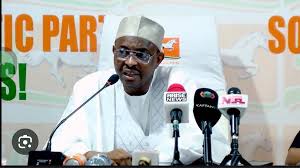
Light vs. Darkness: Between El-Rufai’s Fearless Leadership And Adelabu’s Caution in Nigeria’s Power Sector Struggle.

(Politics)
By: Mohammed Jinadu
The Nigerian media space has been abuzz with discussions following a recent interview granted by former Kaduna State Governor, Nasir El-Rufai, where he delved into the nation’s perennial power crisis and the entrenched “electricity mafia” stifling progres. El-Rufai, known for his no-nonsense approach and reformist zeal, painted a vivid picture of what he described as the “greatest showdown” needed to dismantle the shadowy networks profiting from Nigeria’s darkness. His bold assertions have reignited debates about the competence and political will required to transform the power sector, drawing sharp comparisons with the current Minister of Power, Adebayo Adelabu, whose technocratic approach has yet to yield significant results.
As Nigerians grapple with persistent blackouts, rising tariffs, and a seemingly unbreakable cycle of inefficiency, El-Rufai’s interview has sparked a critical conversation: Could his fearless leadership and willingness to confront powerful interests have been the game-changer Nigeria’s power sector desperately needs? This piece explores the key takeaways from El-Rufai’s revelations, evaluates the contrasting leadership styles of both figures, and examines whether Nigeria’s battle against darkness requires a reformist firebrand or a cautious technocrat.
STATE OF ELECTRICITY IN NIGERIA.
Nigeria’s power sector remains a national embarrassment, with millions of citizens and businesses languishing in perpetual darkness despite decades of promises and reforms. The so-called “electricity mafia” – a shadowy network of powerful individuals profiting from the sector’s dysfunction – has outlived successive governments, leaving the country in a vicious cycle of inadequate supply, rising tariffs, and crumbling infrastructure. As the current Minister of Power, Adebayo Adelabu, struggles to make a tangible impact, the question arises: Could Nasir El-Rufai, the former Governor of Kaduna State, have been the transformative leader the sector desperately needs? A closer look at their competencies, political will, and track records suggests that El-Rufai’s reformist zeal and bold leadership style would have been better suited to tackle Nigeria’s power sector crisis.
ADELABU’S TECHNOCRATIC APPROACH: Competence Without Conviction?
Adebayo Adelabu, a former Deputy Governor of the Central Bank of Nigeria (CBN), was appointed Minister of Power in 2023 with high expectations. His technocratic background and financial expertise were seen as assets to address the sector’s fiscal and operational challenges. However, his tenure has been marked by cautious, incremental steps that have failed to inspire confidence or deliver results.
Adelabu’s emphasis on renewable energy and diversification of the energy mix is commendable, but progress has been slow, with little impact on the ground. His ability to navigate the complex web of political and economic interests in the sector remains untested, and public skepticism is growing due to persistent power outages and rising electricity tariffs. While Adelabu’s competence is not in doubt, his lack of bold, decisive action raises questions about his political will to confront the entrenched interests stifling the sector.
EL-RUFAI’S REFORMIST ZEAL: A Missed Opportunity for Transformation.
In contrast, Nasir El-Rufai’s track record as Governor of Kaduna State and his reputation as a no-nonsense reformer make a compelling case for why he would have been a better Minister of Power. El-Rufai’s tenure in Kaduna was marked by significant infrastructure projects, improved public services, and a willingness to take on powerful interests. His establishment of the Kaduna Electric Power Supply Company, though limited in scope, demonstrated his commitment to addressing electricity challenges at the state level.
El-Rufai’s strong political will and ability to confront entrenched interests would have been invaluable in dismantling the “electricity mafia.” His advocacy for decentralizing the power sector and granting states greater control over electricity generation and distribution aligns with global best practices and could have unlocked significant investments and innovations. Moreover, his focus on public-private partnerships and leveraging private sector expertise would have accelerated progress in addressing Nigeria’s energy deficit.
BOLD LEADERSHIP vs. BUREAUCRATIC CAUTION.
One of El-Rufai’s most defining traits is his willingness to take bold, often unpopular decisions. From demolishing illegal structures in Abuja as Minister of the Federal Capital Territory (FCT) to implementing tough reforms in Kaduna, El-Rufai has consistently demonstrated a results-oriented approach. As Minister of Power, he would likely have set clear targets for reducing power outages, improving generation capacity, and increasing access to electricity, with regular progress reports to the public.
In contrast, Adelabu’s cautious, methodical style has failed to inspire confidence or deliver measurable results. While his technocratic expertise is valuable, the power sector requires a leader who is not only competent but also courageous enough to challenge the status quo. El-Rufai’s sense of urgency and impatience with bureaucratic inertia could have been the driving force needed to break the cycle of stagnation in the sector.
PUBLIC COMMUNICATION AND TRUST.
El-Rufai’s ability to communicate his vision and rally public support for his initiatives would have been another significant advantage. As Minister of Power, he could have used his platform to educate Nigerians about the challenges in the sector and the steps being taken to address them. His engagement with the media and ability to articulate complex issues in simple terms would have helped build public trust and foster a sense of collective ownership of the reform process.
Adelabu, on the other hand, has struggled to connect with the public, and his low-profile approach has done little to reassure Nigerians weary of empty promises. In a sector where public trust is crucial, El-Rufai’s communication skills and reformist zeal would have been a game-changer.
CONCLUSION: A Brighter Future Delayed?
While Adebayo Adelabu’s technocratic expertise is valuable, Nasir El-Rufai’s combination of political will, reformist zeal, and proven track record suggests he would have been a better Minister of Power. His ability to confront entrenched interests, advocate for decentralization, and deliver measurable results could have brought much-needed momentum to Nigeria’s power sector.
The power sector requires a leader who is not only competent but also courageous enough to challenge the status quo. El-Rufai’s leadership style and vision make him uniquely suited for this role, and his absence from the position represents a missed opportunity for transformative change. As Nigeria continues to grapple with its electricity crisis, the lessons from El-Rufai’s approach to governance should serve as a blueprint for future leaders in the sector.
CALL TO ACTION:
The Nigerian government must prioritize appointing leaders with the political will and proven track record to drive meaningful reforms in the power sector. The time for half-measures and excuses is over; the country needs bold, decisive action to break free from the grip of the “electricity mafia” and bring light to its citizens. Only through collective effort and visionary leadership can Nigeria finally overcome its power sector challenges and illuminate the path to a brighter future.
