
External reserves decrease by 0.68% following CBN projection
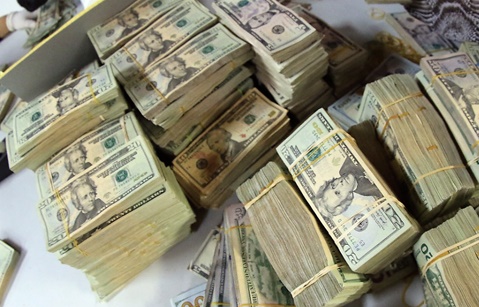
Nigeria’s external reserves have decreased by 0.68% to $36.620 billion as of August 12, 2024, down from $36.872 billion on August 7, 2024, according to the Central Bank of Nigeria (CBN).
This decline follows an increase to $37.88 billion on July 15, 2024, from $34.76 billion at the end of June 2024.
In its inaugural report, ‘ Macroeconomic Outlook: Price Discovery for Economic Stabilisation, ‘ the CBN had previously predicted a slight reduction in reserves for 2024 in its inaugural report,’ citing debt service and other obligations as reasons for the expected decline.
The report noted that external reserves, which were $33.09 billion in 2023, could decrease slightly in 2024 due to ongoing payments for foreign exchange forward obligations, matured swaps, and debt service.
However, anticipated improvements in crude oil earnings and recent reforms in the foreign exchange and energy sectors are expected to mitigate the decline.
On July 8, Nigeria’s foreign reserves surpassed $35.05 billion for the first time in about a year and have remained above that level since.
During the last Monetary Policy Committee (MPC) meeting in July 2024, member Bala Moh’d Bello highlighted the importance of exchange rate stability for maintaining price stability, given its impact on import prices and inflation.
He stated that the central bank has made significant efforts to stabilize the foreign exchange market, resulting in increased foreign portfolio investment and reduced exchange rate volatility.
- DR. SADIQ UMAR ABUBAKAR GOMBE REMAINS THE NATIONAL CHAIRMAN OF SDP

- APC Only Party with Capacity to Secure Nigeria’s Future — Yilwatda

- APC Chairman Visits Plateau Attack Victims, Donates N15 Million, Pledges End to Killings

The bank is also exploring medium- and long-term strategies to ensure that the exchange rate reaches a market-determined equilibrium.
External reserves are assets held by the CBN in foreign currencies, including banknotes like the US dollar, bonds, Treasury bills, foreign government securities, and commodities like gold.
These reserves play various roles, such as influencing monetary policy, supporting the national currency, safeguarding against external obligations, managing exchange rates, and fostering confidence in the Nigerian economy.
They are also essential for facilitating international trade and maintaining economic stability.
MPC member Lydia Shehu Jafiya noted that foreign exchange inflows rose by 38.26% month-on-month between April and May 2024, boosted by higher oil and non-oil receipts.
By the end of June 2024, she indicated that gross external reserves could cover 7.59 months of goods and services imports and 10.88 months of goods imports, while the foreign exchange market experienced relative stability with narrowing rate spreads.
Mustapha Akinkunmi, another MPC member, reported that the naira depreciated to ₦1,605.50 on July 19, 2024, from ₦1,525.00 on June 28, 2024.
As of June 2024, gross external reserves were at US$34.88 billion, projected to drop to approximately US$32.93 billion by the end of May 2024.
This reserve could cover about 11 months of goods imports and around 8 months of goods and services imports.
However, an update from Channels Television indicated a decrease in reserves from $36.620 billion on August 12, 2024, to $36.872 billion on August 7, 2024.
CBN Governor Olayemi Cardoso emphasized the need to monitor developments in the foreign exchange markets, citing their significant impact on inflation and the short to medium-term exchange rate outlook.
He attributed the observed stability in the exchange rate to market confidence in the MPC’s efforts to bring inflation within target.
He cautioned that this fragile equilibrium must be managed carefully to avoid jeopardizing progress in attracting capital flows that support market stability.