

Nigeria Supplies 24-Hour Electricity to Togo, Niger, and Benin Amid Frequent National Grid Collapses

Despite grappling with recent blackouts and national grid collapses, Nigeria continues to supply uninterrupted electricity to neighboring countries, including Togo, Niger, and Benin Republic, according to the Transmission Company of Nigeria (TCN).
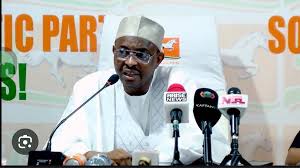
TCN’s Chief Executive Officer, Sule Abdulaziz, disclosed, explaining that these countries receive power from Nigeria round the clock and are paying for the service.
“Yes, they get power from Nigeria on a 24-hour basis, and they are paying,” Abdulaziz said, emphasizing that despite the challenges at home, the cross-border electricity agreements remain operational.
Grid Collapses and Domestic Power Supply Issues
Nigeria’s power sector has faced serious challenges recently, with the national grid collapsing three times in one week, leading to widespread blackouts. However, Abdulaziz noted that not all Nigerians are affected equally, as some residents still enjoy near-constant electricity.
“Some Nigerians are getting 24-hour supply; it’s not everybody,” he clarified. “Those in Band A get between 20 to 22 hours of electricity daily because the distribution companies (DiScos) prioritize them.”
The TCN chief attributed the frequent grid failures to aging infrastructure, though he assured that efforts are underway to stabilize the system.
“We are implementing the ‘scatter system’ for the entire network, funded by the World Bank, which will help reduce grid disturbances. The project is about 70% complete and will take another two years to finish,” Abdulaziz said, referencing the progress celebrated recently in Gwagwalada, Abuja.
Nigerians React to Higher Electricity Tariffs
Meanwhile, Nigerians are grappling with rising electricity costs. In April, the Nigerian Electricity Regulatory Commission (NERC) raised tariffs for customers in Band A—those who receive at least 20 hours of power daily—from ₦66 to ₦225 per kilowatt-hour. This increase, along with the naira’s devaluation and the removal of fuel subsidies, has triggered public outcry.
Abdulaziz defended the pricing, arguing that electricity in Nigeria remains cheaper than in many other African countries.
“Electricity is expensive to produce, but even with recent hikes, Nigeria’s tariffs are still lower compared to countries like Niger, Burkina Faso, and Senegal,” he said.
The recent developments underscore the complexities in Nigeria’s energy sector, with the government balancing domestic supply challenges, international power agreements, and efforts to stabilize the national grid.

