When Power Becomes Property: The Dangerous Culture of Uniforms, Influence and Land in Abuja
By: Ilorin Mohammed Jinadu.
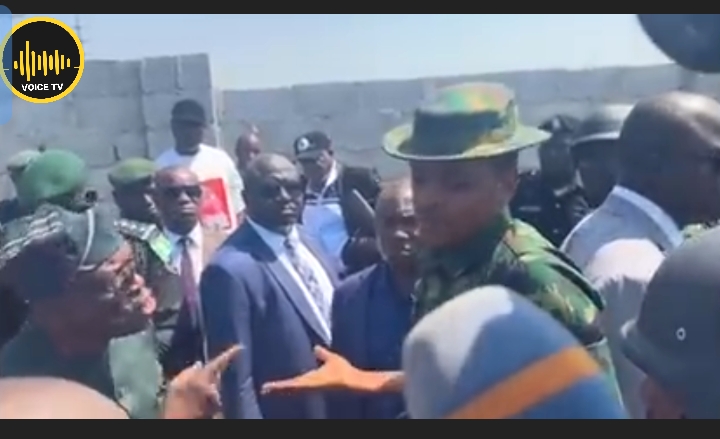
In Abuja, land is not just soil. It has become status, privilege and sometimes the clearest proof of how power is abused. The Federal Capital Territory (FCT), conceived as a symbol of order and neutrality, is fast turning into a theatre where the powerful test the limits of law and ordinary citizens are left as spectators.The Clash at Gaduwa. The recent altercation between the minister of the FCT, Nyesom Wike, and a team of armed soldiers led by Lt. Col. A.S. Yerima at Plot 1946, Gaduwa District, was a dramatic reminder of this.The soldiers, reportedly acting on behalf of Air Vice-Marshal Awwal Zubairu Gambo (rtd.), blocked the minister’s convoy during an inspection of the disputed site.A visibly angry Wike confronted the officer:> “Because you are an officer? The man took land because he was Chief of Naval Staff?”The exchange, caught on video, immediately went viral. Many praised Wike for standing his ground; others accused him of grandstanding. But beyond the political noise lies a deeper issue — the creeping impunity of uniformed privilege in Abuja’s land administration.The Minister’s Own Shadows Ironically, the same charge of privilege now trails the minister’s own inner circle.His Chief Security Officer, ACP Mohammed Musa Iya, is alleged to be at the centre of a disturbing land-grabbing controversy involving a prime property in Katampe Extension, one of the most expensive neighbourhoods in the capital.Court records list ACP Iya as the second defendant in Suit No: FCT/HC/CV/1678/2025 before the High Court, Gudu.The case, filed by Mrs Collen Mero Yesufu, a 79-year-old widow, claims that her plots in Katampe and Guzape were fraudulently taken through forged documents and official collusion.Investigative reports further show that ACP Iya’s name adorns a street — Mohammed Musa Iya Close — in Katampe Extension, a property allegedly acquired even before his last two promotions.(Verity News Online, July 2025)For residents of Katampe, this controversy fits a familiar pattern.Petitions to the FCTA have long complained about developers who arrive with armed escorts and explosives, claiming “orders from above.”(Vanguard, Nov 2024)Uniforms and Impunity From Gaduwa to Katampe, the script is almost identical.A serving or retired officer acquires prime land, often through questionable allocation. Armed security details then secure the site, blocking city officials and intimidating residents.Documentation appears after occupation; objections disappear under silence.When soldiers defy a minister enforcing the law, and a minister’s aide is accused of dispossessing a widow, the moral authority of governance collapses.The uniform — whether khaki or police blue — becomes not a badge of service, but a shield against accountability.What Must Change If Abuja must reclaim its soul, reform cannot stop at demolishing illegal structures; it must confront the power networks behind them.1. Transparency of Records:The FCTA should open its land-allocation database to public scrutiny — every plot, every certificate of occupancy, every revocation.2. Audit of Security-Linked Properties:An independent panel must review estates and luxury developments tied to serving and retired officers, to determine how titles were obtained.3. Internal Accountability:The minister must distance his office from scandal. Any aide, including ACP Iya, facing credible land-related allegations should step aside pending investigation.4. Civil Oversight over Armed Influence:The presence of soldiers or police on private property outside official duty should attract immediate disciplinary action.The Lesson for Wike and Abuja Minister Wike has declared a crusade to restore Abuja’s master plan. It is a commendable mission — but it must begin at home.The law he wields against the mighty must also reach those within his own convoy. Only then can the fight against impunity earn moral legitimacy.Beyond the Individuals The issue transcends Wike, Gambo or Iya. It is about a culture in which power and privilege routinely bend the law. The same pattern that allows generals to fence off public land also enables aides to name streets after themselves.Abuja was meant to embody equality — a city where citizenship, not connection, defines access. Each time a uniform shields wrongdoing, that founding ideal fades a little more.Final Word The capital is watching. Nigerians are watching.If Wike truly intends to restore Abuja’s dignity, his first victory must be over the contradictions within his own administration.Otherwise, the city will remain what it has sadly become — a place where power becomes property, and the uniform, once sacred, turns into the licence for impunity.